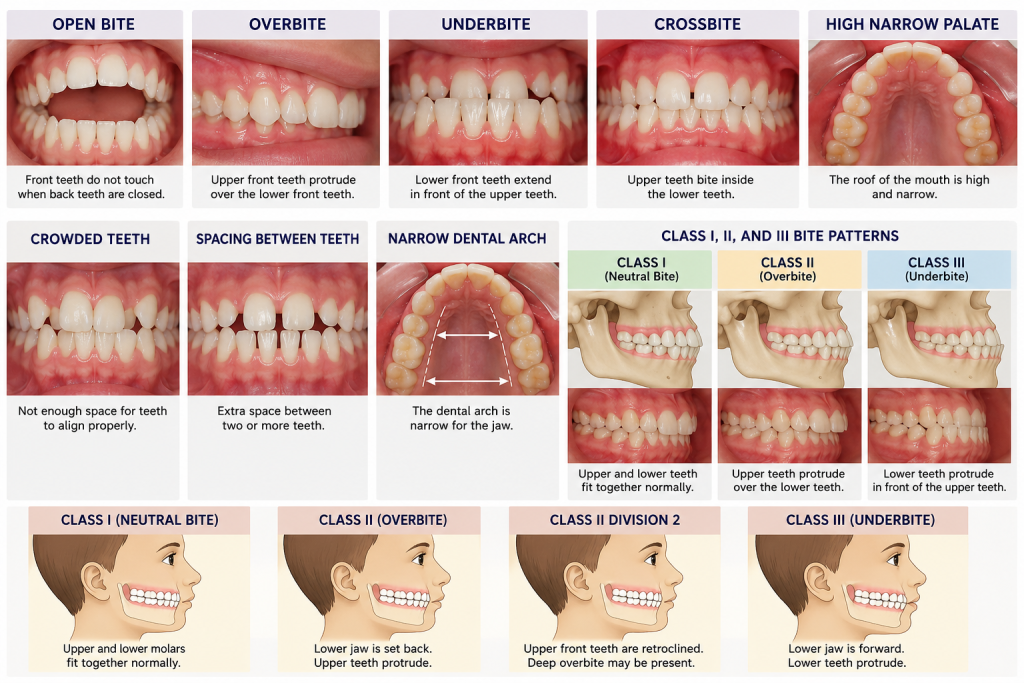
Dental development plays an important role in a child’s speech, feeding, breathing, and overall oral facial growth. During childhood, clinicians may observe various dental patterns such as open bites, overbites, underbites, crossbites, crowded teeth, spacing between teeth, high narrow palates, and narrow dental arches. These patterns can develop from a combination of genetics, oral habits, and airway concerns. Prolonged thumb sucking, pacifier use, mouth breathing, low tongue posture, tongue thrust swallowing, and enlarged tonsils or adenoids can all impact the way the jaw and teeth grow over time. Early identification of these patterns is important because they may affect chewing skills, speech sound production, sleep quality, and oral rest posture.
Understanding dental and bite patterns can help families seek appropriate support early. Children with airway restrictions or poor oral habits may benefit from a collaborative approach involving dentists, orthodontists, ENTs, speech language pathologists, and myofunctional therapists. Treatment may include orthodontic expansion, braces, habit elimination programs, myofunctional therapy, tongue tie evaluation, and nasal breathing training. We support proper tongue posture, chewing patterns, and oral function during development which can positively influence long term facial growth, breathing efficiency, and communication skills.